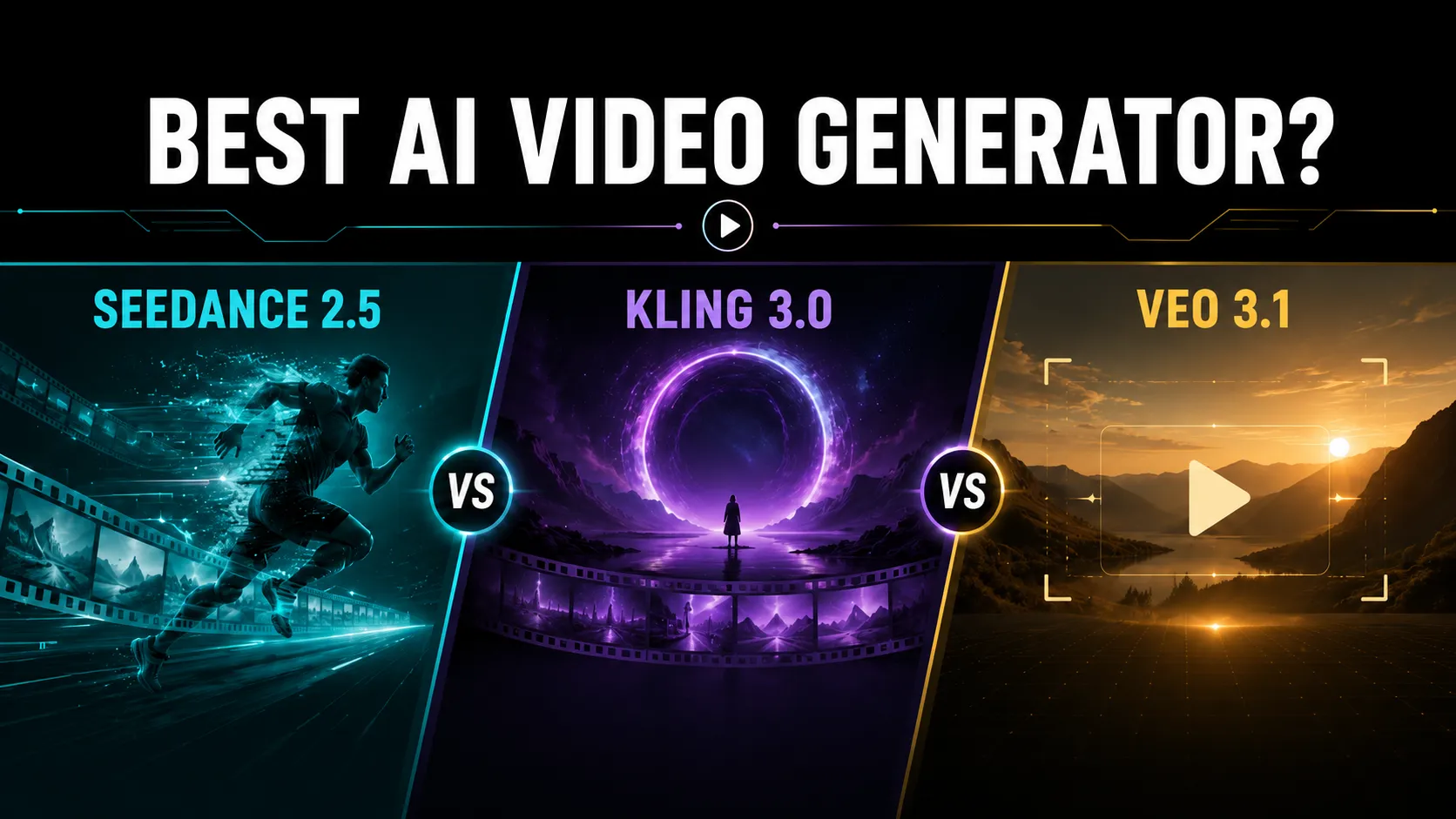
AI video is no longer one-size-fits-all.
Creators now face a new problem: there are too many powerful AI video generators, and each one seems to promise the best results. But the real question is not simply which model is “the best.”
The better question is: which AI video model fits your creative workflow?
Seedance 2.5, Kling 3.0, and Veo 3.1 represent three different directions in the future of AI video generation. This guide compares Seedance 2.5 vs Kling 3.0 vs Veo 3.1 from a practical user-demand perspective.
🔊 Seedance 2.5 is currently still in the preview stage, so this comparison is based on announced and expected capabilities rather than hands-on production testing.
What is the Main Difference Between Seedance 2.5, Kling 3.0 and Veo 3.1?
Three models. Three creative priorities.
The biggest difference between these models is not only video quality. It is how each model appears to think about video creation.
AI Video Model | Core Positioning | Main User Need |
Seedance 2.5 | Upcoming reference-driven AI video workflow | More control, richer references, fewer stitched clips |
Kling 3.0 | Cinematic short-form video direction | Strong camera motion and fast visual impact |
Veo 3.1 | Polished realistic AI video generation | Natural realism, audio-rich storytelling, smooth transitions |
In simple terms:
🎨 Seedance 2.5 is about building a more complete scene
🎥 Kling 3.0 is about directing powerful shots
🌏 Veo 3.1 is about generating polished cinematic moments
Seedance 2.5 vs Kling 3.0: Which is Better for Creator Control?
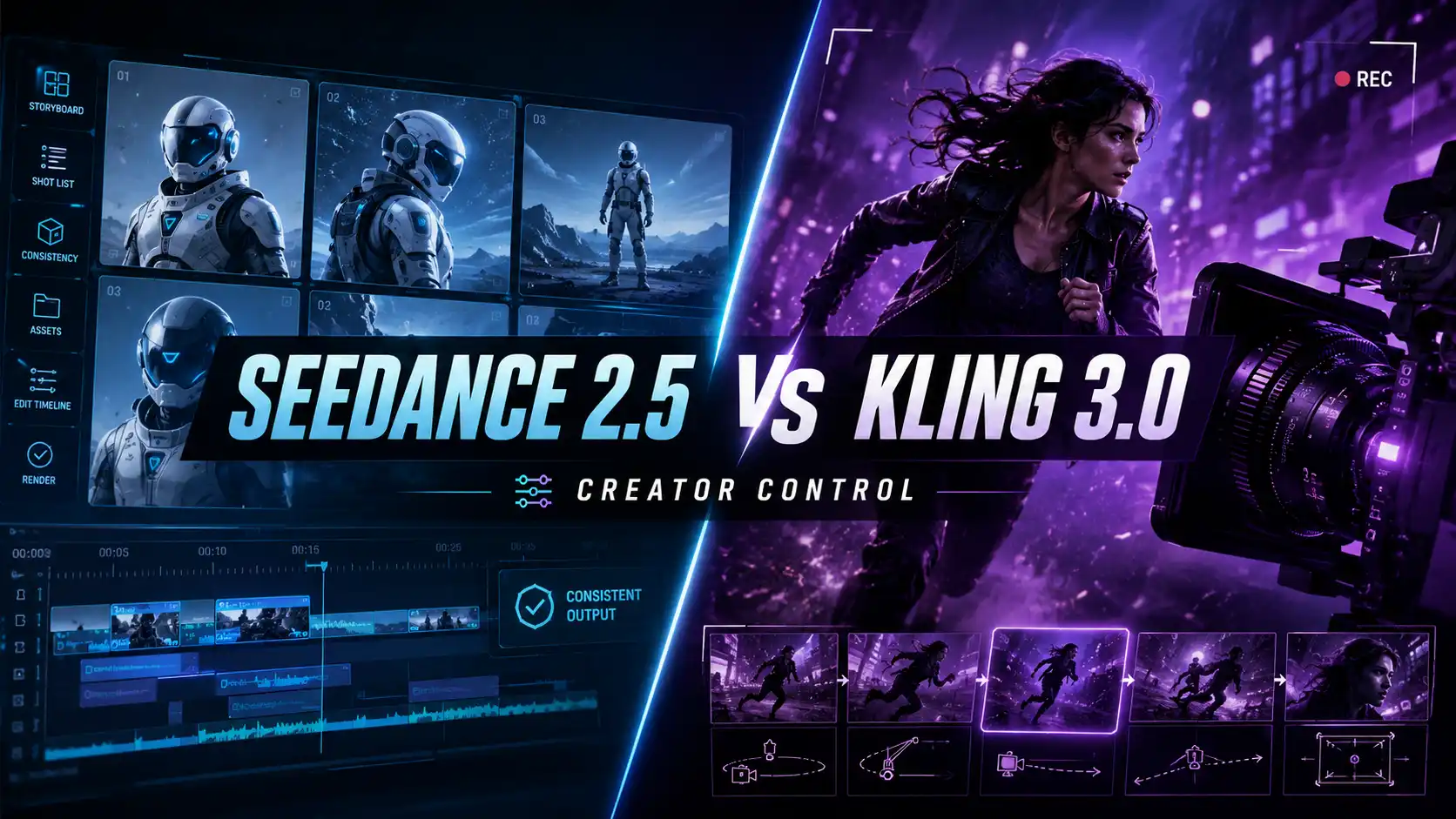
Seedance is built for consistency. Kling is built for direction.
Seedance 2.5: More controlled video with multiple inputs
✅ Better Choice for Creators who want:
brand consistency
reference control
longer story flow
😊 This is useful for:
Ecommerce product videos that need the same product to stay recognizable
Brand campaign videos that require consistent colors, design style, and atmosphere
AI short drama scenes that need longer emotional continuity
Creator videos where one idea needs to become a complete social media clip
Reference-based AI video generation where characters, scenes, and props matter
Kling 3.0: Strong visual energy
✅ Better Choice for Creators who want:
cinematic camera movement
fast shot changes
dynamic short videos
😊 This is useful for:
Camera-driven scenes that need fast zooms, sweeping moves, dramatic close-ups, and strong visual rhythm
Action videos that rely on quick cuts, impact moments, character movement, and cinematic pacing
Music video shots that need stylized lighting, expressive motion, and beat-driven camera changes
Short-form social clips that need eye-catching visuals for TikTok, YouTube Shorts, Instagram Reels, and ads
Director-style AI video creation where creators want to build scenes shot by shot instead of relying on one simple prompt
💡 In short,
Seedance 2.5 is a more complete AI video production workflow.
Kling 3.0 can feel closer to a shot-building tool.
Seedance 2.5 vs Veo 3.1: Which is Better for Cinematic AI Video?
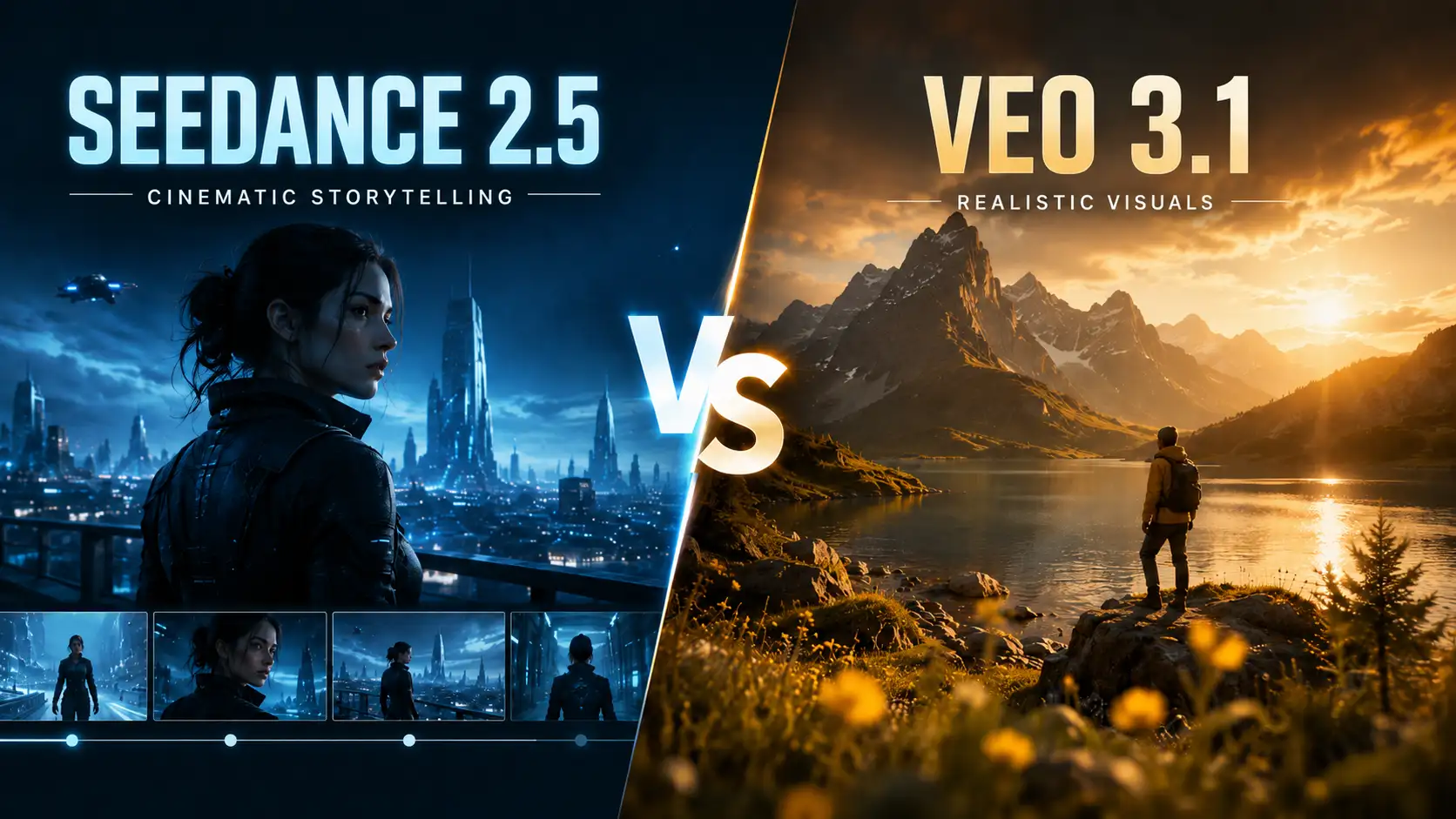
Seedance is built for production control. Veo is built for cinematic polish.
Seedance 2.5: More repeatable video workflow
✅ Better Choice for Creators who want:
longer AI video scenes
reference-based visual control
consistent characters, products, and scenes
brand-ready cinematic content
😊 This is useful for:
Cinematic product videos that need the same product, lighting style, and visual identity to stay consistent
Brand storytelling videos that require a polished look across multiple scenes or campaign assets
AI short films and drama scenes that need stronger continuity instead of disconnected visual moments
Creator videos where one concept needs to become a complete cinematic social media clip
Reference-driven AI video generation where characters, props, locations, and style references must work together
Veo 3.1: Highly polished realism
✅ Better Choice for Creators who want:
realistic AI video quality
cinematic lighting and atmosphere
smooth scene transitions
audio-rich visual storytelling
😊 This is useful for:
Cinematic hero shots that need realistic lighting, natural motion, and a high-end visual finish
Fantasy or sci-fi concept scenes where atmosphere, mood, and worldbuilding matter more than repeatable production control
First-to-last frame transitions that need a smooth change between two visual moments
Realistic environment videos that focus on natural landscapes, city scenes, architecture, or emotional visual storytelling
Trailer-style AI clips where creators want a polished cinematic moment rather than a longer production workflow
💡 In short,
Seedance 2.5 is better positioned for longer, more controllable cinematic video production.
Veo 3.1 can feel closer to a polished cinematic moment generator.
Best Use Cases for Each AI Video Model
The best model depends on the job.
Different creators have different goals. The best model is the one that solves the user’s real production problem.
Use Case | Best Fit | Why It Works |
YouTube Shorts and TikTok clips | Kling 3.0 / Seedance 2.5 | Kling is strong for high-impact shots; Seedance may help create more complete short videos |
Product demo videos | Seedance 2.5 | Product consistency, reference control, and brand visuals matter most |
Cinematic hero shots | Veo 3.1 | Realism, lighting, and atmosphere are key |
AI short drama scenes | Seedance 2.5 | Longer story flow and visual continuity are important |
Music videos and stylized edits | Kling 3.0 | Camera movement, rhythm, and visual energy are central |
Frame transition videos | Veo 3.1 | Smooth cinematic transition is a strong use case |
Brand campaign variations | Seedance 2.5 | Reference-based generation can support consistent creative assets |
Dialogue or character performance clips | Kling 3.0 / Veo 3.1 | Native audio, expression, and scene realism matter |
AI film previsualization | Seedance 2.5 / Veo 3.1 | Seedance helps plan scenes; Veo helps create polished moments |
Social ad production | Seedance 2.5 | Useful when creators need repeatable video output, not just one viral clip |
Weak Points of Seedance 2.5, Kling 3.0 and Veo 3.1?
Every AI video model has trade-offs.
Seedance 2.5: Strong Potential, But Not Fully Proven Yet
Because Seedance 2.5 has not fully launched yet, most comparisons are still based on preview information. Its expected strengths are promising, but real-world performance still needs broader validation.
❗ Creators should pay attention to:
Preview uncertainty: final results may differ from early demos or announcements.
Planning requirements: longer videos need clearer scene structure, pacing, and camera direction.
Reference management: more references can improve control, but messy inputs may confuse the result.
Kling 3.0: Strong Direction, But Short-Form Focused
Kling 3.0 is powerful for cinematic camera movement. However, it may not always be the best choice for long, continuous storytelling.
❗ Creators should pay attention to:
Continuity pressure: characters, costumes, and props may still need careful control across shots.
Direction dependency: strong results require clear camera language and shot planning.
Detail stability: fast motion can make small visual details harder to preserve.
Veo 3.1: Polished, But Not Always Workflow-Friendly
Veo 3.1 is strong for realistic AI video. Its main limitation is not visual quality, but production flexibility.
❗ Creators should pay attention to:
Batch production challenges: it may be less practical for repeated brand assets or product variations.
Control vs realism: realistic output does not always mean precise control over products, logos, or characters.
Retry cost: complex scenes may still require multiple attempts to get the right result.
How to Compare the Cost of Different AI Video Generators?
The real cost is not only price. It is how many tries it takes to get a usable video.
AI video cost changes quickly, and different platforms may use different pricing models.
A better way to compare cost is to focus on workflow efficiency.
Creators should consider:
Generation cost: how much each video attempt costs
Retry cost: how often you need to regenerate
Editing cost: how much manual repair is needed
Stitching cost: how much time is spent connecting short clips
Brand risk: whether product, logo, or character details remain consistent
Workflow speed: how fast the model helps you reach a usable result
From this angle, Seedance 2.5 may offer strong value because it can help creators reduce stitching, retries, and manual visual fixes.
Choose by workflow, not by model name.
Need a brand story or product video?
Need a longer AI video generation workflow?
Need reference consistency and creative control?
🎨 Prepare for Seedance 2.5 🔗.
Need music video shots?
Need a fast cinematic social clip?
Need camera energy and shot rhythm?
🎥 Try Kling 3.0 🔗.
Need a polished realistic scene?
Need smooth frame transition?
Need cinematic storytelling and atmosphere?
🌏 Consider Veo 3.1 🔗.
While waiting for Seedance 2.5, creators can start learning Seedance prompt techniques, including scene structure, reference planning, motion description, camera movement, image-to-video prompting, and editing logic.
The better you understand Seedance 2.0 today, the faster you will be ready for Seedance 2.5 when it arrives.
Try Seedance 2.0 AI Video Generator - Free to Start 👉
The future of AI video generation will not belong to the loudest model.
It will belong to creators who know how to choose the right tool for the right story.